
Inside This Article
Don't miss out on our latest stories, insights, and updates.
Green Cumin vs Black Cumin: Key Differences and Benefits
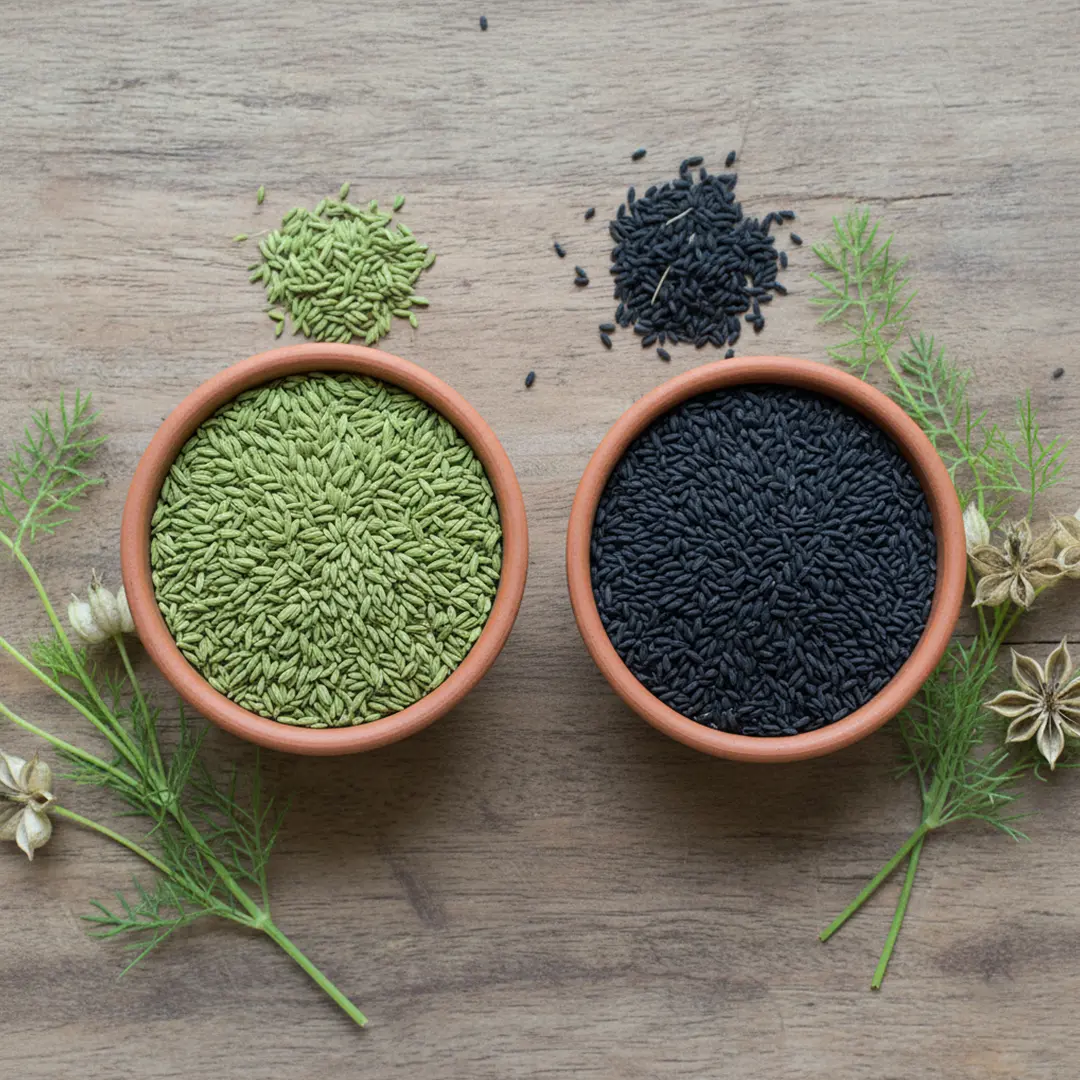
Cumin is one of the most important spices in both traditional and modern industries. While green cumin (Cuminum cyminum) and black cumin (Bunium persicum) are often confused, they are two distinct herbs with different flavors, health benefits, and applications. Understanding their differences helps businesses and consumers choose the right variety for culinary and medicinal purposes.
Historical and Cultural Significance
Cumin has been used for thousands of years in Persian, Indian, and Middle Eastern traditions. Green cumin has been a staple spice in kitchens worldwide, while black cumin (often called “Persian black gold”) is deeply tied to Iranian heritage, especially in Kerman and Khorasan provinces. Their cultural roots add to their global market value.
Key Differences
- Botanical Origin
- Green Cumin: Cuminum cyminum
- Black Cumin: Bunium persicum (also known as Persian black cumin)
- Flavor Profile
- Green Cumin: Warm, earthy, slightly nutty
- Black Cumin: Stronger, more pungent, with bitter undertones
- Culinary Uses
- Green Cumin: Widely used in spice blends, curries, soups, sauces
- Black Cumin: Popular in Persian cuisine, rice dishes, and herbal remedies
- Health Benefits
- Green Cumin: Supports digestion, antioxidant, improves metabolism
- Black Cumin: Rich in essential oils, stronger antimicrobial and digestive effects
- Market Value
-
- Green Cumin: More common, widely cultivated, lower price
- Black Cumin: Rarer, more aromatic, considered premium in global trade
Discover more Iranian herbs in our Leaves Collection.
How to Choose Between Green and Black Cumin
When selecting cumin for culinary or industrial use, consider the following:
- For Everyday Cooking: Green cumin is versatile, affordable, and suitable for a wide range of dishes.
- For Premium Flavor & Medicinal Use: Black cumin offers a stronger aroma and higher therapeutic value, making it ideal for health-focused industries.
- For Export & Trade: Businesses often combine both, using green cumin for volume and black cumin for premium, niche markets.
Choosing the right variety depends on whether the goal is flavor, health benefits, or market positioning.
Industrial Applications
- Food Industry: Green cumin is widely used in spice blends and seasonings, while black cumin is preferred in premium Persian rice dishes and specialty sauces. Similar to Sumac, which adds tangy notes to salads and kebabs, both varieties of cumin bring authentic Iranian flavors to global cuisines.
- Pharmaceuticals: Both types are applied in traditional remedies; black cumin, with its higher essential oil content, is especially valued in medicinal formulations. Like Thyme and Asafoetida (Hing), cumin contributes to natural digestive and antimicrobial products.
- Cosmetics & Wellness: Extracts of cumin are used in antimicrobial skincare, digestive supplements, and herbal teas. Comparable to Golpar, cumin is becoming more popular in wellness and aromatherapy markets.
- Global Trade: Black cumin is considered a premium export product, while green cumin dominates in mass production and global supply chains. Together with Iran’s other medicinal herbs such as saffron and thyme, cumin strengthens the country’s position in international herbal trade.
FAQ
Q1: Which is better, green or black cumin?
It depends on usage—green cumin is versatile for daily cooking, while black cumin is valued for stronger flavor and medicinal properties.
Q2: Are they interchangeable in recipes?
Not entirely—black cumin has a more intense taste, so it is used in smaller amounts.
Q3: Why is black cumin more expensive?
It is rarer, harder to cultivate, and highly aromatic, making it a premium product in export markets.
Conclusion
Both green cumin and black cumin play important roles in food and medicine. Green cumin is a versatile everyday spice, while black cumin is prized for its stronger aroma, medicinal value, and premium status.
At Norsage, we supply and export both varieties of Iranian cumin in bulk, ensuring businesses worldwide can access authentic quality herbs directly from their origin.

