
Inside This Article
Don't miss out on our latest stories, insights, and updates.
Pink Salt vs Regular Salt
Discover the Difference Between Pink Salt vs Regular Salt
A Tale of Two Salts
Salt is one of the oldest and most essential seasonings in human history. From enhancing flavor to preserving food, it plays a vital role in both kitchens and industries.
But in recent years, pink salt has gained global attention for its color, purity, and health claims. How does it really compare to regular white salt?
In this article, we’ll explore the key differences between the two — from their origin and mineral composition to their global market value.
👉 Discover more premium salts and seasonings at Norsage Products.
1. Origin and Formation
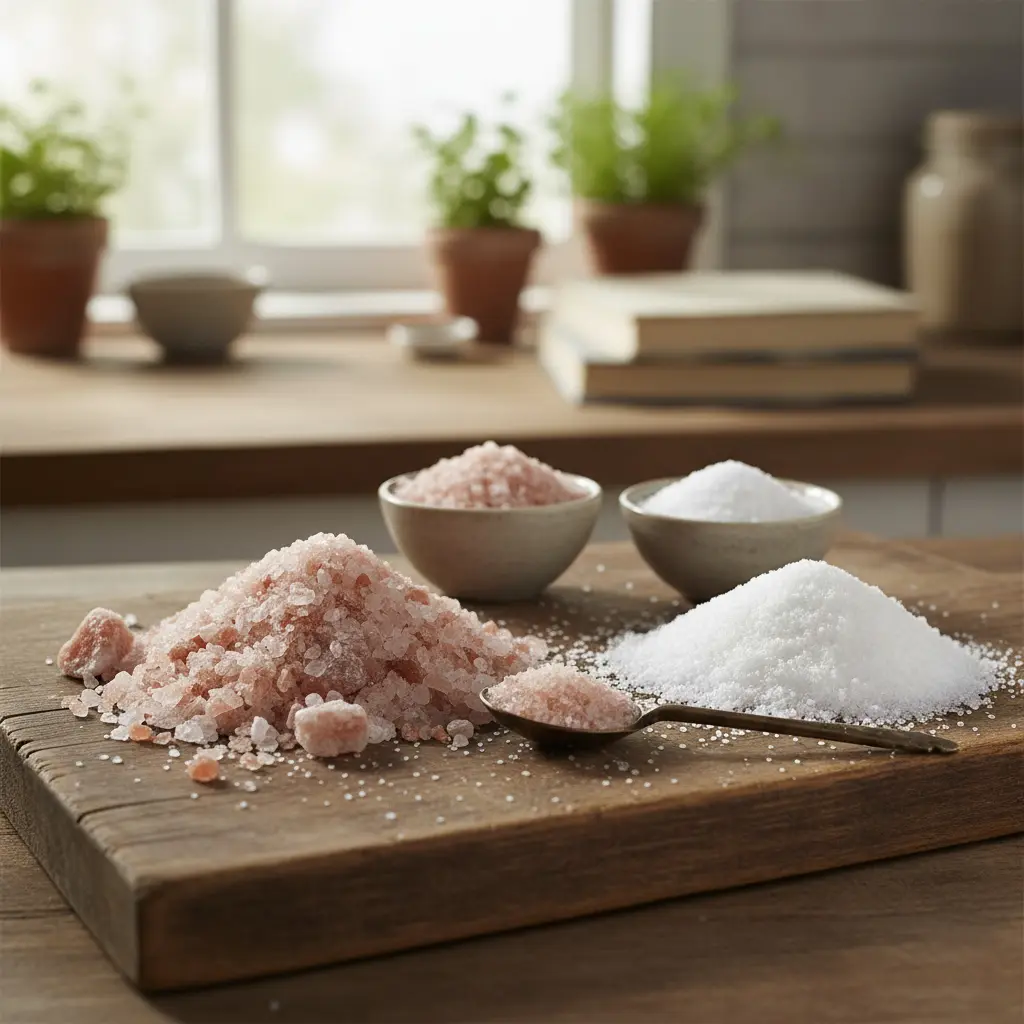
Pink Salt – primarily sourced from the Himalayan region, this salt owes its delicate pink hue to trace minerals like iron, magnesium, and potassium. It is often hand-mined and minimally processed, making it a symbol of natural purity.
Regular Salt (White Salt) – usually obtained through evaporation of seawater or mining of rock salt. It undergoes industrial refinement to remove impurities, resulting in its pure white color and uniform texture.
Learn more about our Pink Salt
and White Salt at Norsage.
-
Mineral Composition and Health Aspects
| Feature | Pink Salt | Regular Salt |
| Minerals | Contains up to 80+ trace minerals | Mostly sodium chloride |
| Color | Naturally pink due to iron oxide | Pure white |
| Processing | Minimal, hand-extracted | Heavily refined |
| Additives | Usually none | Often contains anti-caking agents or iodine |
| Taste | Subtly earthy and mild | Sharper and saltier |
While pink salt offers trace minerals, the difference in nutritional value compared to regular salt is modest. However, many prefer pink salt for its natural origin and lower processing.
-
Culinary and Industrial Applications
Both salts are essential in global industries:
- Pink Salt: Popular in gourmet cuisine, luxury spas, and wellness products. It’s also used in decorative salt lamps and bath formulations.
- White Salt: Dominates in food manufacturing, preservation, and chemical industries due to its affordability and availability.
Explore more high-quality seasonings and salts offered by Norsage.
-
Market Value and Global Demand
The market for pink salt has seen rapid growth in Europe, the Middle East, and Asia, driven by the wellness trend and consumer interest in “natural” ingredients.
Meanwhile, regular salt remains the backbone of food production and industrial processes worldwide.
As a trusted Iranian supplier, Norsage provides both varieties, sourced and processed under strict quality control to meet international standards.
-
Quality Assurance at Norsage
At Norsage, quality is more than a promise — it’s a process.
Our salts undergo comprehensive quality control, from mineral analysis to packaging, ensuring purity, consistency, and safety for both food and industrial use.
Discover how Norsage ensures the highest quality in every shipment on our Products Page.
Conclusion: Which Salt Should You Choose?
If you’re looking for aesthetic appeal and natural minerals, pink salt is an elegant choice for culinary and wellness uses.
If you prioritize cost-efficiency and large-scale industrial use, regular white salt remains indispensable.
Ultimately, both salts serve unique purposes — and with Norsage, you can count on authenticity, quality, and reliability no matter which one you choose.
👉 Explore premium salts and other natural products at Norsage.
FAQ
Q1: Which is better — pink salt or regular salt?
It depends on your needs. Pink salt offers trace minerals and a more natural appeal, while regular salt is refined and ideal for consistent seasoning in large-scale food production.
Q2: Can I use pink salt instead of regular salt in cooking?
Yes, you can. Pink salt adds a subtle flavor and aesthetic touch, but you might need slightly more due to its milder saltiness.
Q3: Why is pink salt more expensive than regular salt?
Pink salt is mined naturally, less processed, and contains trace minerals, which makes it more valuable and popular in premium markets.
Q4: Is pink salt really healthier?
While pink salt contains small amounts of minerals, both salts have similar sodium levels. Moderation is key for a healthy diet.

